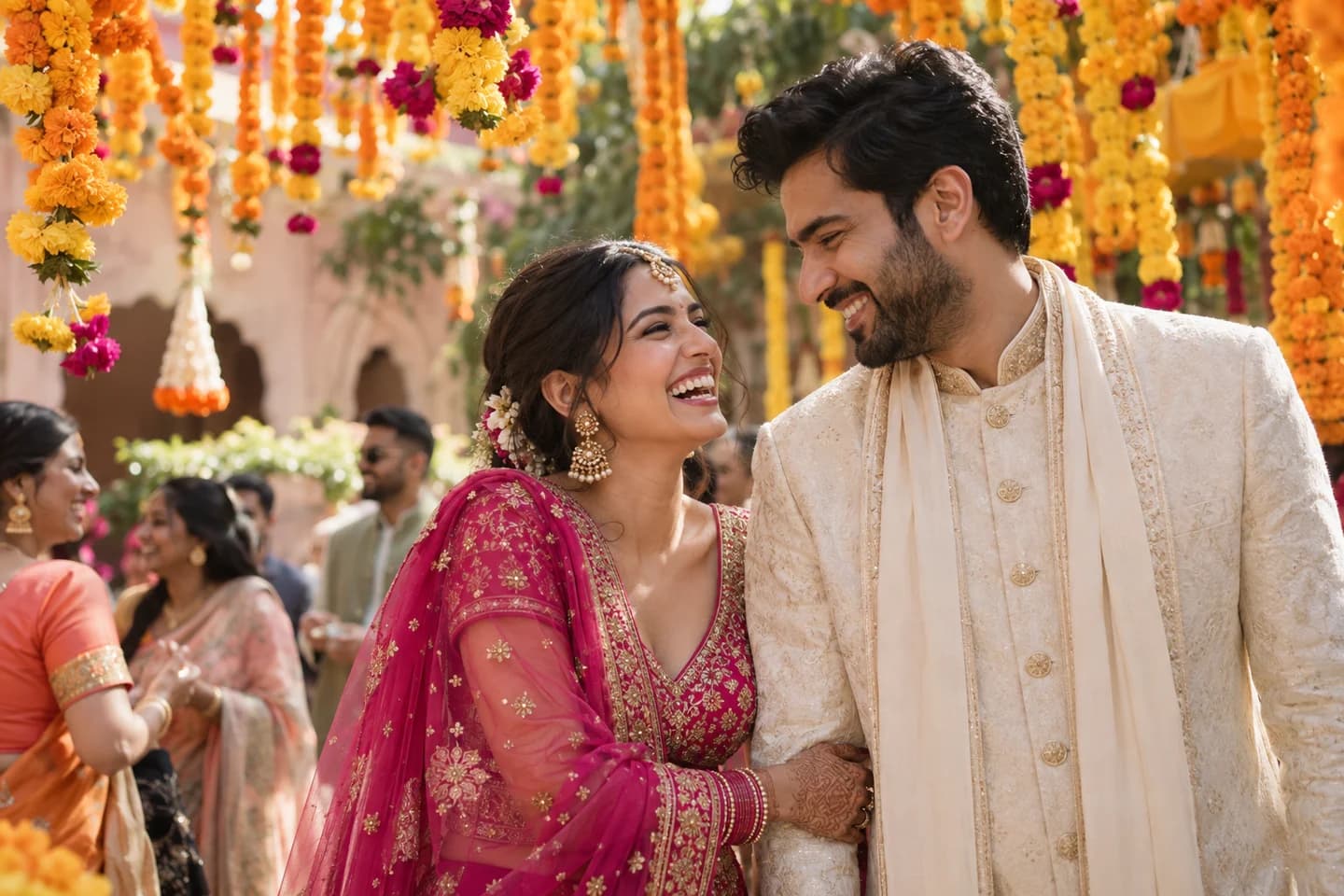
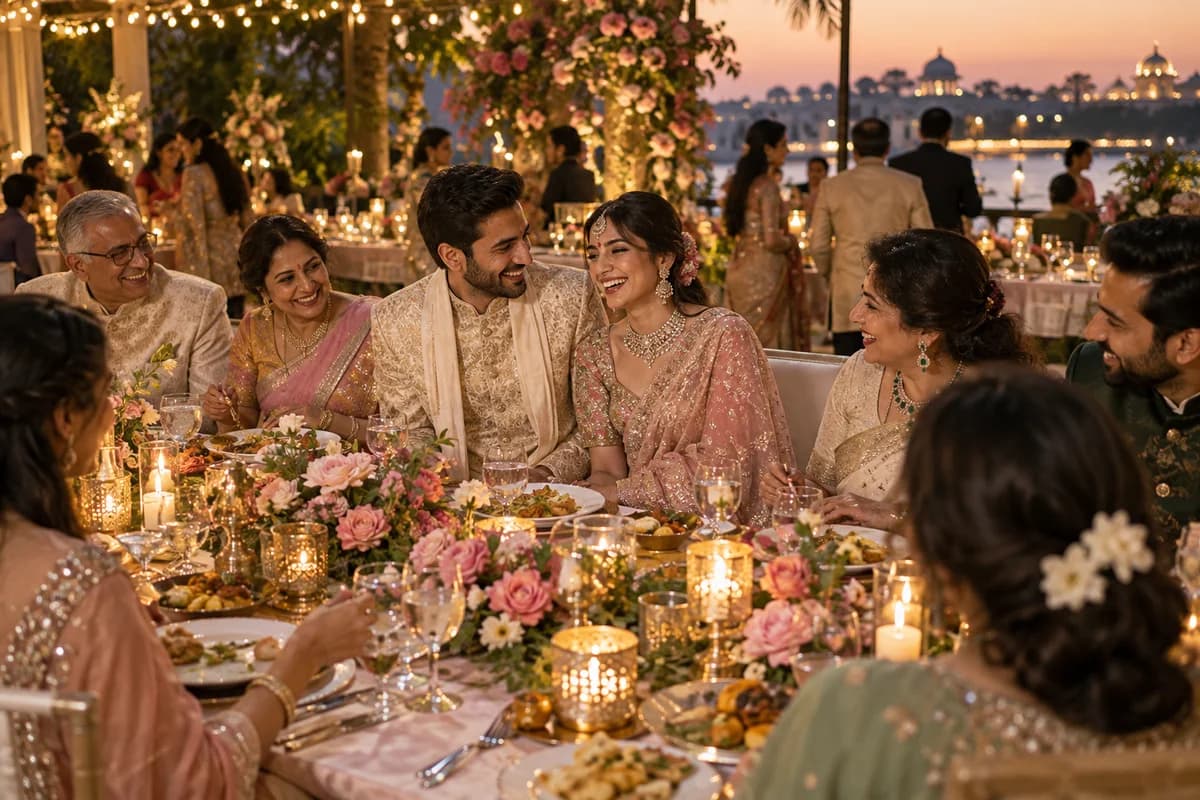
“There’s no single way to have an Indian wedding. Let’s explore the moments you love, understand what they can mean, and make room for your family’s own story.”
A starting point, never a rulebook. Region, religion and family practice don’t always line up neatly. Confirm your ceremony with your families and officiant.
The moments around the marriage.
MEHER EXPLAINS · 01
Mehndi
Think of this as time to settle in together: henna, conversation and a little anticipation. Participation can be optional; comfortable seating and time for drying are thoughtful details.
A note on variations
Mehndi is part of many celebrations, but not every family includes it. Decide whether yours is a small gathering or an event for everyone.
MEHER EXPLAINS · 02
Haldi & family preparations
A joyful pause before the main celebration. If you’re including turmeric or another family preparation ritual, I’d make room for a change of clothes and a relaxed cleanup.
A note on variations
Names and customs differ: you may hear haldi, pithi or gaye holud. Ask your families about their own version rather than assuming one sequence.
MEHER EXPLAINS · 03
Sangeet, garba & music
A little music can turn two groups of guests into one happy crowd. Performances are lovely if you enjoy them; nobody needs a choreographed routine to belong.
A note on variations
A sangeet, a garba evening or a simple musical gathering can each feel different. Choose what fits your people, venue and energy.
MEHER EXPLAINS · 04
The wedding ceremony
This is where I’d slow down and listen to you. A mandap ceremony, Anand Karaj, nikah, church service or personal vows each needs its own thoughtful preparation.
A note on variations
Region and religion are different things. Confirm the actual ceremony with your families and officiant, then explain it gently to guests.
MEHER EXPLAINS · 05
Reception & goodbyes
Good food, warm company and time to enjoy being married. I’d work backward from guest transport and your energy levels, so the last part of the celebration feels as good as the first.
A note on variations
A reception, walima or smaller family meal needn’t follow the same format. Keep the guest list, timings and invitations clear for each gathering.
START WITH WHAT FEELS LIKE YOU
A plan that respects your traditions.
Choose a starting point in Meher’s conversation or the planner form. It adds relevant preparation tasks and ceremony notes. Social events remain your choice, and everything is editable.
Our own / still exploring
“You don’t need a label to begin. Let’s choose the moments that matter to you and leave room for the details to unfold.”
How your plan adapts
Decide which traditions you want to include, adapt or leave out
“If a mandap ceremony is part of your day, I’d start with its timing and your family’s chosen rituals. The rest of the celebration can take its rhythm from there.”
How your plan adapts
Confirm your ceremony sequence and timings with the officiant
Check the venue’s arrangements for the mandap and any sacred fire
“Some Tamil families include an oonjal, or swing ceremony; others celebrate differently. Tell me which customs are yours, and we’ll make space for them without squeezing the morning.”
How your plan adapts
Confirm the ceremony time and family-specific ritual sequence
Ask whether an oonjal is included and arrange a suitable setup if needed
Confirm the thaali and other ceremony items with your officiant
“Jeelakarra bellam is one custom you may want to discuss with your families. I’d get the ceremony sequence agreed first, then give each person a clear role and an unhurried arrival time.”
How your plan adapts
Confirm the ceremony timing and whether jeelakarra bellam is included
Agree the ceremony materials and who will bring each item
Plan guest arrival before the officiant’s agreed start time
“A garba evening can be a lovely way to bring people together if it belongs in your celebration. Let’s leave breathing room between the dancing, getting ready and your ceremony.”
How your plan adapts
Agree the ceremony sequence and materials with your officiant
Decide whether garba is part of your music evening and plan its space
Allow time for outfit changes between celebrations
“From shubho drishti to mala badal, your family may have moments they’re especially looking forward to. I’d ask which ones you want, then help your guests understand what they’re seeing.”
How your plan adapts
Agree which Bengali ceremony customs you want to include
Confirm garlands and any family-specific ceremony materials
Prepare a short explanation of the ceremony for guests
“If your ceremony includes the antarpat and mangalashtaka, those moments deserve a little rehearsal with the people helping. Small, thoughtful preparation makes everyone feel more at ease.”
How your plan adapts
Confirm the antarpat and ceremony sequence with your officiant
Coordinate the people helping during the mangalashtaka
“For an Anand Karaj, I’d begin with your gurdwara’s guidance. We can make the guest notes especially welcoming for anyone attending for the first time.”
How your plan adapts
Confirm the Anand Karaj arrangements directly with the gurdwara
Share the gurdwara’s head-covering, footwear and seating guidance
Coordinate arrival, accessibility and any langar arrangements
“Let’s give the nikah its own clear place in your plans. Your officiant can guide the ceremony arrangements; I can help you coordinate the people, timing and guest information around it.”
How your plan adapts
Confirm nikah arrangements, witnesses and preparation with your officiant
Discuss any mahr arrangements privately with the appropriate people
Decide whether the reception represents your walima and confirm its schedule
“Church and family traditions vary, including across Kerala, Goa and beyond. I’d start with your church’s ceremony guidance, then weave in the family celebrations you love.”
How your plan adapts
Confirm ceremony preparation and requirements directly with your church
Agree readings, music and any rehearsal with your officiant
Confirm any regional family customs and reception timing
“You don’t have to fit two families into one template. Let’s give each meaningful moment its place and agree what you’re keeping, adapting or creating together.”
How your plan adapts
Agree together which customs to include, adapt or leave out
Coordinate the sequence with each ceremony officiant or celebrant
Write guest guidance that explains each tradition without assuming familiarity